
Fractional CO2 Laser Resurfacing: It's Not the Laser, It's the Dial-In
By Alexander E. Bonato, MD — Board-Certified in Internal Medicine · Medically reviewed September 2026.
TL;DR: Fractional CO2 laser resurfacing uses a grid of tiny, water-absorbing laser injuries to trigger months of collagen rebuilding, and it's one of the most heavily studied resurfacing tools in dermatology. In a randomized trial, roughly two in three treated sides showed real, lasting improvement in periorbital wrinkles, and the effect depended more on using the right energy and density settings than on turning the power up. For acne scars, pooled trial data show it measurably improves skin texture, though it doesn't clearly out-perform other established scar treatments on every measure. It's also not right for everyone. Very dark skin tones, active acne, recent Accutane, and a handful of other conditions rule it out, and I'll walk through why.
I've hit a golf ball off a roof. I've hit one onto an actual road, the kind with moving cars on it. By hole four on one particularly bad day, I'd left enough divots that the fairway looked like something had recently grazed through it. At this point I only play courses that already have a few problems. Nothing I do is going to be what ruins them.
That's not really a golf story. It's a story about what happens when you apply a lot of force without quite enough precision. It also happens to be the exact problem a fractional CO2 laser was built to solve. I'm a board-certified physician practicing aesthetic medicine at Bonato MD Aesthetics, and fractional CO2 resurfacing is one of the oldest, most heavily studied tools in this field, older than half the devices that get marketed as breakthroughs. It's also one where the settings matter more than the power, which is a lesson I clearly never applied to a 7-iron.
What Fractional CO2 Laser Resurfacing Actually Does
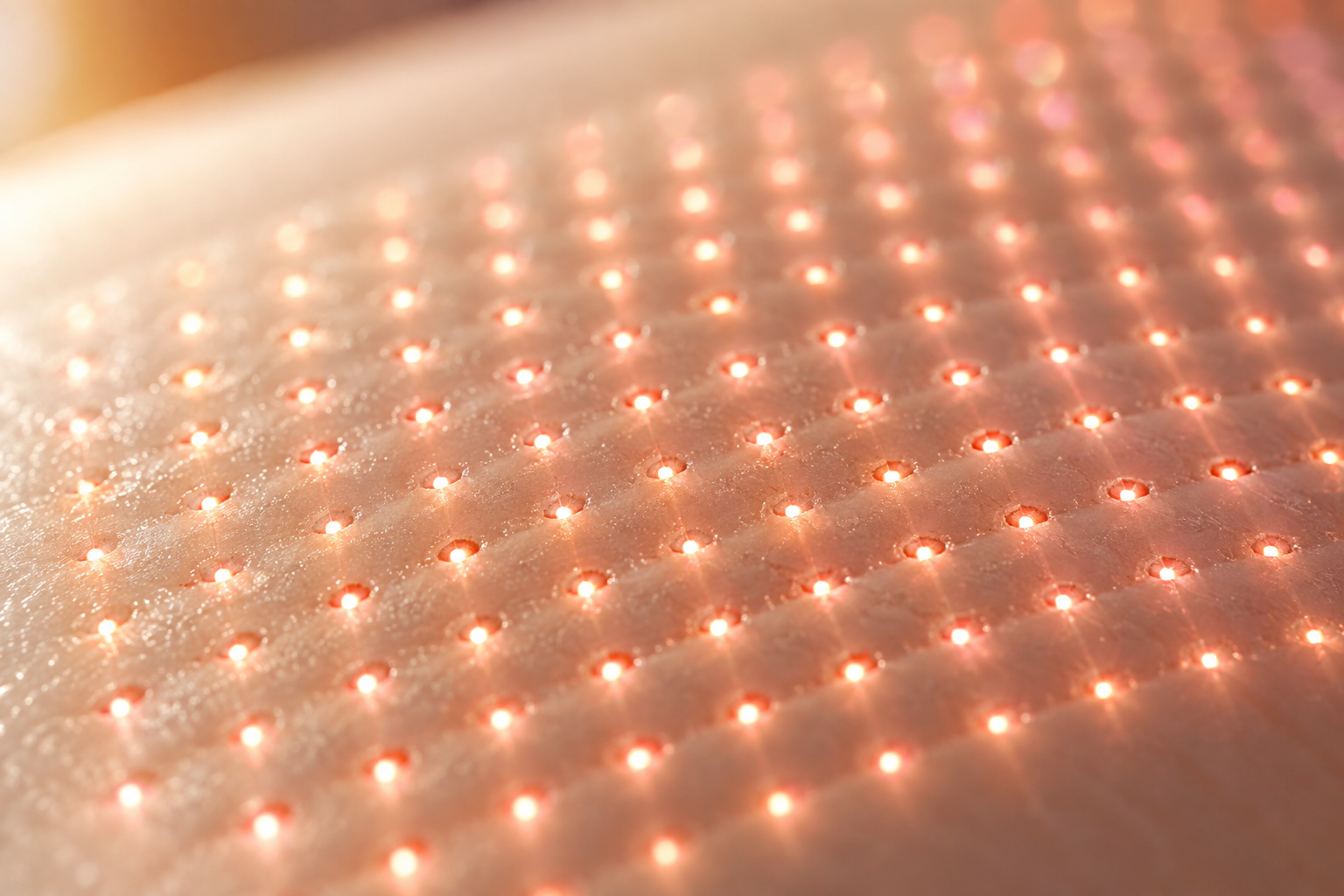
A CO2 laser puts out light at a wavelength, 10,600 nanometers, that water absorbs extremely well. Skin is mostly water, so the energy gets soaked up fast, right at the surface and down into the dermis underneath it. "Fractional" is the important word here. Instead of treating the entire surface at once, the laser fires through a lens that breaks the beam into an array of tiny columns, each one a few hundred microns wide, in a grid pattern across the treatment area.
Each column vaporizes a small cylinder of tissue and leaves a ring of controlled heat damage around it. The skin between those columns is left completely alone. That untouched tissue is the reservoir your body uses to heal fast, migrating new cells in from the sides instead of having to rebuild an entire surface from scratch. You leave with a visible pinprick grid and some redness. Then, over the following weeks and months, your own fibroblasts quietly rebuild collagen around every one of those points. That slow, invisible part is what actually accounts for most of the result.
It's the same logic as aerating a lawn. You're not trying to kill the grass. You're poking a controlled pattern of holes in it so it grows back thicker than it started.
What It's Used For
In practice, fractional CO2 resurfacing gets used for a fairly wide range of things:
● Wrinkles and fine lines (rhytids), especially the static ones that stick around at rest
● Uneven texture and general photoaging from sun damage
● Atrophic and hypertrophic scarring, including acne scars
● Pigment irregularities and some benign pigmented spots
● Stretch marks
There's also a shorter list of less common uses, like enlarged oil glands and a few nose-thickening conditions, that we'll leave for another conversation since they're not what most people are actually asking about. I've got real trial data in hand for two of the items above, wrinkles and acne scars, so let's look at the actual evidence instead of listing indications like a brochure would.
The Science, Simplified: Wrinkles
The best evidence I have on hand is a randomized trial out of Shanghai Ninth People's Hospital, published this year (Reference 1). Thirty patients with static wrinkles around the eyes were split into three groups, each testing a different combination of energy and density, and each patient acted as their own control. Twenty completed the full six-month follow-up. The other ten dropped out because of COVID-19 disruptions, not because anything went wrong with the treatment.
Both the investigators and the patients themselves rated 68.2% of treated sides as visibly improved, using a standard five-point visual scale. That's the headline number, and it's a real one. But here's the honest layer underneath it: on a more objective wrinkle-scoring scale, only one of the three parameter combinations, the lower-energy, higher-density setting, produced a statistically real improvement, and it held all the way through six months. The higher-energy, lower-density setting looked fine on the visual read but didn't move the needle on that harder measure.
Translation: cranking the energy up isn't what makes this work. A precise, lower-energy pattern delivered with more coverage did the actual work of shrinking wrinkle scores. The lesson to take from this isn't "more laser, more result." It's the same thing every golfer eventually learns, and apparently keeps having to re-learn: dialed in beats maxed out.
A few honest caveats. This was a small trial, twenty completers, in an East Asian population with periorbital wrinkles specifically, not a general claim about every face and every wrinkle everywhere. Discomfort during treatment ran from mild to moderate for most patients (3 to 7 out of 10 on a pain scale), and the study itself was funded in part by the laser's manufacturer, which I'm telling you because that's the rule I hold every source to, including the ones that make my own equipment.
The Science, Simplified: Acne Scars
For acne scars, the best evidence is a meta-analysis pooling six randomized trials (Reference 2). Here's the part that matters: these trials didn't compare CO2 laser against doing nothing. They compared it against other real, established scar treatments already in use, things like microneedling, radiofrequency microneedling, and chemical reconstruction of scars.
Pooled together, patients rated their skin measurably smoother after CO2 laser than after the comparison treatments, a real, statistically solid difference. But on the measure that probably matters most to an actual patient, meaning did the scars visibly get better by a clinician's assessment, the six trials didn't agree with each other closely enough to call CO2 laser a clear winner over the alternatives. Scar depth scores and patient satisfaction came out about the same between groups too. Side effects were also statistically similar between CO2 and the comparison treatments.
So here's the straight version. If rough texture is your main complaint, this laser has real trial support for smoothing that specific thing. If you're hoping it clearly beats microneedling or other established scar treatments across the board, the pooled data doesn't back that up yet. It's a genuinely solid option in the same tier as the alternatives, not a silver bullet over them. I'd love to tell you this is the one laser to end all lasers. The data won't let me sell you that, so you get the honest version instead.

Who's a Good Candidate (and Who Isn't)
This device isn't for everyone, and the list of reasons is longer than most people expect. We don't treat active infection or active acne at the site, a history of poor healing or keloid scarring, autoimmune disease that affects healing, Accutane use in the past six months, filler or neurotoxin at the treatment site within the last two weeks, daily blood thinners, an active cold sore without antiviral coverage first, recent tanning or sun exposure, pregnancy or breastfeeding, or a skin disorder or skin cancer at the site.
We also don't treat the darkest skin tones (Fitzpatrick V-VI) with this particular device, and I want to be honest about why, because the reason is more interesting than "it's risky."
The most common complication after CO2 resurfacing is post-inflammatory hyperpigmentation, dark patches where the treated skin was. A review pooling 14 studies and over 300 patients found the incidence swung anywhere from 0% to 100% depending on the study (Reference 3), genuinely unpredictable. The part that actually surprised me reading it: skin type itself wasn't a reliable predictor. One study of only the darkest skin types recorded zero cases. Another study, of a lighter-but-still-medium skin type, recorded it in three out of every four patients. So this isn't simply "darker skin, higher risk." It's closer to "we can't yet reliably predict whose skin will react this way," which is exactly why we still draw a conservative line at the darkest skin types. When the outcome isn't predictable, the safer move is to not take that risk with the group where the stakes, and the evidence, are thinnest.
None of this is meant to scare you off the treatment. It's meant to be the conversation we actually have before I ever turn the laser on.
Where This Fits
If scar texture is your main concern and you want the fuller comparison against another option we offer, our microneedling for acne scars post walks through that alternative in more detail. And if you want to know exactly what the week after this treatment looks like, day by day, that's our CO2 laser recovery post , because it genuinely deserves more than a paragraph here.
Frequently Asked Questions
Does it hurt?
There's real discomfort, not nothing. Patients in the wrinkle trial reported 3 to 7 out of 10 during treatment, and most were under a 4. Afterward it settles into something that feels like a sunburn for an hour or two. We use topical numbing beforehand, which I promise is more effective than my golf swing.
How many sessions will I need?
The wrinkle trial used two sessions, three months apart. The scar studies ranged from one session to five, depending on severity and the specific protocol. We'll settle on a number based on what we're actually treating, not a fixed package.
Am I a candidate?
Probably, if you don't fall into the list above. But the honest answer is a consultation, not a guess from a blog post. Some of those exclusions are permanent for this device, and some, like recent filler, are just about timing.
Will the results last?
The wrinkle trial's improvement held through six months, which is the longest anyone followed up. Collagen remodeling from a single course of treatment isn't forever, and new sun damage or new acne will still do what new sun damage and new acne do. This resurfaces what's there. It doesn't vaccinate you against time.
How's this different from gentler, "no downtime" lasers?
CO2 is ablative, meaning it actually removes a fraction of the skin's surface in that grid pattern. Gentler, non-ablative lasers heat tissue underneath without removing the surface, which means less downtime and, generally, a more modest result per session. Neither one is the "better" laser in the abstract. They're built for different amounts of change and different amounts of time you're willing to spend recovering.
What about darker skin tones?
We don't use this specific device on the darkest skin types (Fitzpatrick V-VI), for the unpredictability reasons above. For medium and tan skin tones, we take extra pre- and post-treatment steps specifically aimed at lowering pigment risk, which our recovery post covers in more detail.
The Honest Version, Start to Finish
Fractional CO2 resurfacing is old, well-studied, and genuinely effective when the settings are dialed in by someone paying attention to more than the power dial. It's not a universal upgrade over every gentler alternative, and it's not right for every skin type. If you're in Medford, Ashland, or Grants Pass and you want to talk through whether it fits what you're actually trying to fix, come in and let's look at it together. Bring your questions and bring your skin history.
Book a consultation and we'll figure out, honestly, whether this is the right tool for you.
References
1. Wu X, Cen Q, Jin J, et al. An Effective and Safe Laser Treatment Strategy of Fractional Carbon Dioxide Laser for Chinese Populations with Periorbital Wrinkles: A Randomized Split-Face Trial. Dermatol Ther (Heidelb). 2025;15(6):1307-1317. https://doi.org/10.1007/s13555-025-01404-3
2. Lin L, Liao G, Chen J, Chen X. A systematic review and meta-analysis on the effects of the ultra-pulse CO2 fractional laser in the treatment of depressed acne scars. Ann Palliat Med. 2022;11(2):743-755. https://doi.org/10.21037/apm-22-70
3. Bin Dakhil A, Shadid A, Altalhab S. Post-inflammatory hyperpigmentation after carbon dioxide laser: review of prevention and risk factors. Dermatol Rep. 2023;15:9703. https://doi.org/10.4081/dr.2023.9703
