
Dermal Fillers 101: It's a Sugar That Drinks Water (Yes, Really)

By Alexander E. Bonato, MD — Board-Certified in Internal Medicine · Medically reviewed July 2026.
TL;DR: Dermal fillers are gels — most often hyaluronic acid (HA), a sugar your skin already makes — injected to restore lost volume and soften folds. Unlike Dysport or Botox, which relax muscles, fillers add structure and fullness right where time took it. The best evidence shows HA fillers clearly beat doing nothing, and land on par with other quality fillers — chosen mostly because they look natural, are adjustable, and are reversible. Results are immediate and, depending on the product and area, typically last several months to a couple of years. Serious complications are rare but real, which is why who injects you matters more than which brand is on the syringe.
For the first decade of my marriage, I quietly cropped my wife out of her own vacation photos. Not on purpose — I just framed every shot from the ankles up, deeply confident I was capturing the moment, until she gently informed me that women would, in fact, like their shoes to appear in the picture. It turned out the whole outfit was the point, and I'd been amputating it at the shins for years. I am, on occasion, a man who misses the one obvious detail that makes the entire thing work.
Which is a funny thing to admit for someone whose actual job is the opposite: noticing the small, hard-to-name detail that makes a face look rested instead of tired. I'm a board-certified physician (internal medicine by training) who practices aesthetic medicine at Bonato MD Aesthetics in Medford, and few treatments attract more questions — or more myths — than dermal fillers. So here's the honest 101: what they are, how they actually work, whether they do anything, and where the marketing gets a little ahead of the science.
First: A Filler Is Not a Neuromodulator
Let's settle the most common mix-up immediately, because it sends people to the wrong appointment. There are two very different injectable tools, and they do opposite jobs:
● Fillers (usually hyaluronic acid gel) add volume. They restore fullness or smooth a fold — think of re-inflating a cheek that's slowly deflated, or softening the crease that runs from your nose to your mouth.
● Neuromodulators (Dysport, Botox) relax muscles to soften lines that movement creates — frown lines, crow's feet.
Same needle, opposite job. If you're not sure which one you need, that's genuinely what a consult is for. Want the muscle-relaxing side of the story? I wrote a whole piece on how neuromodulators work. Curious about the volume side specifically? That's our fillers service page.
So What Is Hyaluronic Acid, Really?
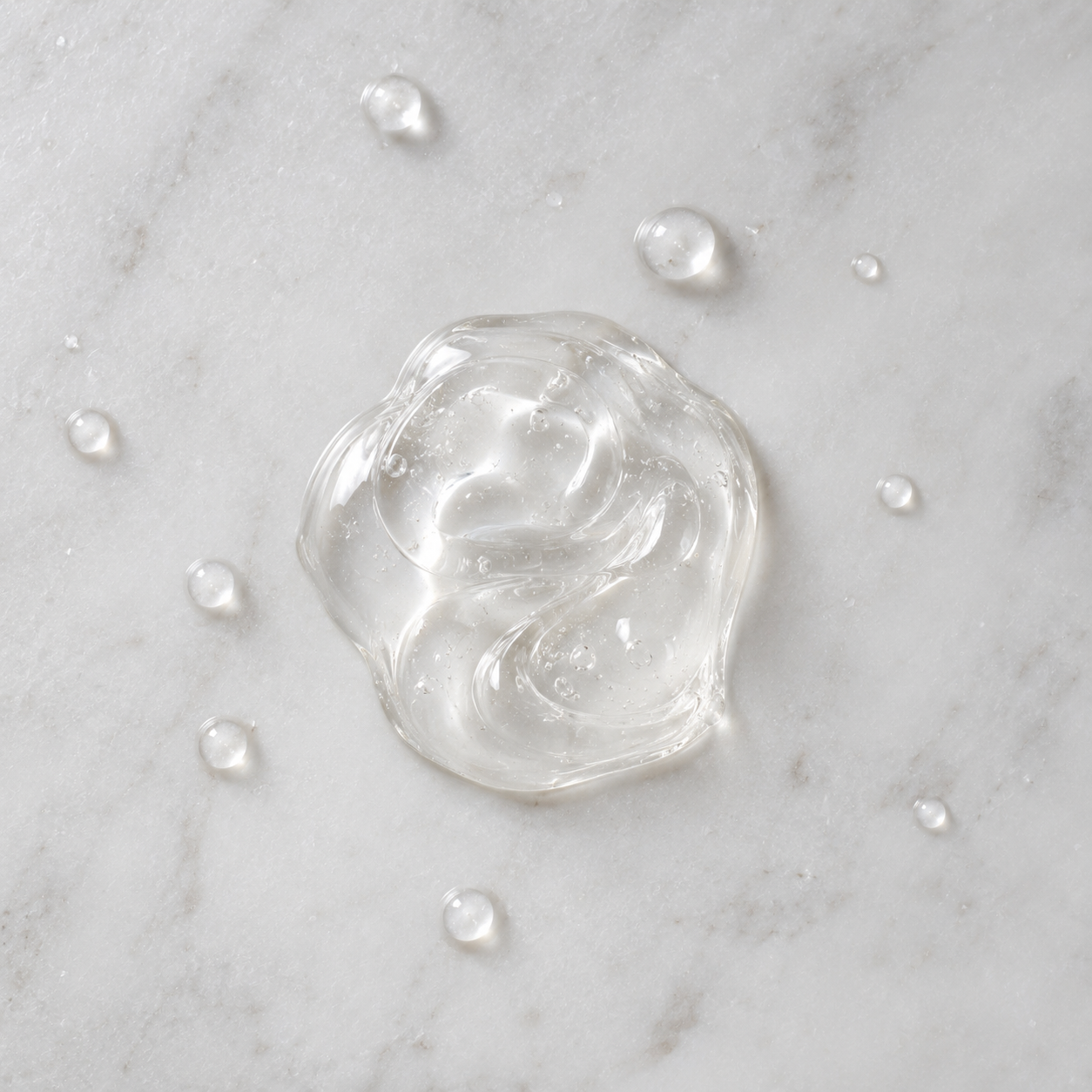
Here's the reassuring part: hyaluronic acid isn't some exotic industrial compound. It's a sugar molecule — a glycosaminoglycan, if you're ever cornered at trivia night — that your body already makes. It's in your skin, your joints, and your eyes, and its whole superpower is holding onto water. One reason young skin looks plump and springy is that it's rich in HA; one reason older skin doesn't is that we simply make less of it over time.
An HA filler is that same molecule, purified into a smooth gel and “cross-linked” so it lasts. Cross-linking just means the HA chains are chemically tied together so your body can't dissolve them in a couple of days the way it would loose HA — it's the difference between a moisturizer that rinses off and a gel that holds its shape under the skin for months. Different products are cross-linked to different firmnesses, which is why a soft lip gel and a firm cheek scaffold can both be “HA filler” and behave nothing alike.
How Fillers Actually Work — Volume Now, a Little Collagen Later
Two things happen. The obvious one is instant: the gel physically takes up space, restoring volume and lifting a fold the moment it's placed. And because HA is a water-magnet, it draws in moisture, which is part of that fresh, hydrated look.
The second is slower and subtler. In a one-year study of a cross-linked HA filler in 122 patients, the wrinkle-smoothing effect actually peaked around six months and overall volume closer to twelve — the researchers credit the filler supporting the tissue and prompting some collagen remodeling as it gradually breaks down. One honest asterisk: that study followed a single product with no comparison group, and its publication costs were paid by the filler's manufacturer, so I read its sunniest numbers with a raised eyebrow. But the broad shape — volume immediately, the result maturing over months — matches what we actually see in the room.
Do Fillers Actually Work? The Honest Evidence
Short version: yes — and I can point to real evidence, with one caveat worth your time. A 2025 systematic review and meta-analysis (with no industry funding, which is genuinely rare in this field) pooled randomized trials of HA fillers for cheek and midface volume. Against placebo, HA fillers were dramatically better — the lopsided kind of result you'd hope for. But when HA was compared head-to-head with other quality fillers, such as calcium hydroxylapatite or poly-L-lactic acid, there was no meaningful difference: comparable satisfaction, comparable improvement.
I think that's the single most useful thing to understand as a patient. HA is not the “best” filler in some universal ranking, and anyone marketing it that way is overselling. It's a preferred filler for very practical reasons: it looks natural, it's adjustable, and — the big one — it's reversible. You're not choosing HA because it wins a chart; you're choosing it because it's forgiving.
Where Fillers Go
The usual targets are the cheeks and midface (rebuilding the upper-face fullness that flattens with age), the nasolabial folds from nose to mouth, the lips, and increasingly the jawline, chin, and temples. Each area holds filler differently — lips, which never stop moving, don't hold as long as a cheek does — which is a big enough question that it earned its own post on how long fillers last, by area.
Is It Safe? (The Straight Answer)
For a healthy patient in trained hands, HA fillers have a strong safety record — and HA's reversibility is a genuine safety net. That said, no injection is risk-free, and you deserve the honest picture:
● Common and minor: swelling, bruising, redness, or tenderness at the injection sites — usually mild and gone within a couple of weeks.
● Less common: lumps or nodules, or a little asymmetry that may need a touch-up or a small amount of dissolving.
● Rare but serious: if filler is accidentally placed into or presses on a blood vessel, it can block blood flow — a vascular occlusion — which in very rare cases can threaten the skin or, extremely rarely, vision. This is the complication every responsible injector trains and prepares for.
Here's the part the glossy before-and-afters leave out: the controlled trials that make fillers look nearly side-effect-free are, by design, too small and too short to catch these rare events — one manufacturer-funded safety review admitted exactly that about its own data. Large real-world series confirm serious complications are uncommon, but they do occur, and the honest number isn't zero. That's precisely why filler is a medical procedure, not a retail transaction: it's about anatomy, technique, and having a plan when something goes wrong.
I'm not telling you this to scare you off a genuinely good treatment — I'm telling you because you deserve to hear it plainly from the person holding the syringe. In an upcoming post I'll walk through exactly how we prevent and manage the rare serious complications, because “we're prepared for it” should mean something specific.
The Part I Love Most: You Can Undo It
This is the feature that makes HA my default for most first-timers: if you don't love the result, or something needs adjusting, an enzyme called hyaluronidase can dissolve HA filler — often within a day or two. Almost nothing else in aesthetics comes with an eraser. It's its own small procedure and it isn't a magic wand, but knowing the result isn't permanent takes a lot of the fear out of starting. (More on when and how we dissolve filler in a post soon.)
Frequently Asked Questions
Does getting filler hurt?
Most modern fillers are pre-mixed with a little numbing lidocaine, and we can numb the area beforehand, so people are usually surprised how tolerable it is. Lips are the tender exception — they earn their reputation — but even those land closer to “that wasn't bad” than “never again.”
How long will it last?
It depends on the product and the area — generally several months to a couple of years, with mobile spots like lips on the shorter end and structural areas like cheeks on the longer. It's enough of its own question that I gave it a dedicated post .
Will I look overdone or “done”?
Not if it's done conservatively. That overfilled look you're picturing is the result of chasing more-more-more, not an inevitable feature of filler. Good filler is the work you don't notice — you just think someone looks like they slept eight hours and came back from vacation. The goal is “you look great,” never “you had something done.”
Can it really be dissolved?
Yes — HA fillers can be dissolved with hyaluronidase, which is exactly why I reach for them with nervous first-timers. It's the closest thing aesthetics has to an undo button, and it's a big reason HA became the default.
Am I even a candidate?
Most healthy adults bothered by volume loss or folds are — but the honest answer depends on your goals, your anatomy, and occasionally whether filler is even the right tool (sometimes it isn't, and I'll say so). That's the entire point of a consult.
Let's Figure Out What's Actually Bothering You — Here in Southern Oregon
Volume loss is one of those things you notice in photos before you ever catch it in the mirror — though you don't have to crop yourself out of them the way I once did to my wife. At Bonato MD Aesthetics we help patients from Medford, Ashland, and Grants Pass figure out whether filler, a neuromodulator, or honestly nothing at all is the right answer for what's actually bothering them — with a straight take on what the evidence supports.
Book a consultation and we'll build a plan that looks like you, just more rested.
References
1. Safia A, Abd Elhadi U, Merchavy S, Batheesh R, Bathish N. Efficacy and Safety of Hyaluronic Acid Fillers for Midface Augmentation: A Systematic Review and Meta-Analysis. Medicina (Kaunas). 2025;61(10):1823. https://doi.org/10.3390/medicina61101823
2. Shome D, Khalsa D, Joshi B, et al. Prospective Clinical Evaluation of Cross-Linked Hyaluronic Acid Dermal Filler (30 mg) for Facial Rejuvenation. Plast Reconstr Surg Glob Open. 2025;13(10):e7149. https://doi.org/10.1097/GOX.0000000000007149
3. Frank K, Hilton S, Kerscher M, Grablowitz D, Kopera D, Sulovsky M, Kursinov L. The Safety Profile of a Portfolio of Hyaluronic Acid-Based Soft Tissue Fillers Manufactured Using MACRO Technology: A Systematic Review of Clinical Evidence. Life (Basel). 2026;16(1):110. https://doi.org/10.3390/life16010110
