
Dissolving Filler with Hyaluronidase: The Closest Thing We Have to Ctrl+Z
By Alexander E. Bonato, MD — Board-Certified in Internal Medicine · Medically reviewed August 2026.
TL;DR: Hyaluronidase is an enzyme that dissolves hyaluronic acid filler — the closest thing aesthetics has to an undo button. We use it for the everyday reasons (an overfilled or lumpy result, filler that migrated, a bluish tinge under the eyes, or simply changing your mind) and for the rare emergency (a suspected vascular occlusion, where it's the first-line treatment). It only works on HA fillers, it's usually quick, and it's individually dosed by a clinician — not a DIY project. That reversibility is a big reason HA is the most forgiving filler to start with.
I play golf the way a bull experiences a china shop. Over the years I have personally sent a golf ball onto a public road, off the roof of a house, and into three separate yards that were, geographically speaking, not part of the course. There is no undo button in golf. The ball goes exactly where your incompetence sends it, and then you write down a number that is a polite work of fiction. It is a deeply humbling sport for a man who otherwise likes precision.
Which is why I have real appreciation for the rare arena where I actually get a do-over — and in aesthetics, that arena is hyaluronic acid filler. Unlike my tee shots, an HA result isn't permanent and it isn't final: if something needs undoing, we can undo it. I'm a board-certified physician (internal medicine by training) at Bonato MD Aesthetics, and here's the honest guide to dissolving filler — what hyaluronidase is, the good reasons we use it, the emergency reason we're always ready to, and the fine print.
What Hyaluronidase Actually Is
Hyaluronidase is an enzyme — think biological scissors — that breaks down hyaluronic acid. Your own body makes versions of it; the kind we use is a purified, injectable form. Placed into an area of HA filler, it does exactly one useful thing: it speeds up the breakdown of that filler, shrinking or clearing it far faster than your body would on its own. Because it targets HA specifically, it's the built-in “off switch” that comes with choosing an HA filler in the first place.
The Everyday Reasons We Dissolve Filler
Most dissolving isn't dramatic — it's tidying up. The common reasons:
● Too much of a good thing. An overfilled or unnatural result — the look nobody was actually going for.
● Lumps or nodules. A bump you can feel that didn't smooth out, or filler that settled unevenly.
● Migration. Filler that drifted from where it was placed (a known issue with over-treated lips).
● The Tyndall effect. Filler placed too superficially, especially under the eyes, can cast a bluish tinge — dissolving clears it.
● You simply changed your mind. A completely valid reason. Reversibility means you were never married to the decision.
The evidence supports this. In the clinical literature, hyaluronidase reliably improves or resolves overcorrection and persistent swelling — reported improvement in stubborn post-filler edema ranges from roughly half to complete resolution. It isn't always one-and-done (a tough case can need more than one session), but it works.
The Emergency Reason: Suspected Vascular Occlusion
One use isn't cosmetic at all, and it's the reason a good clinic always has hyaluronidase in the building. If filler blocks a blood vessel — a vascular occlusion — hyaluronidase is the first-line treatment to dissolve the filler and restore blood flow, and it is genuinely time-sensitive. This is the serious side of “reversible,” and it's why the antidote being in the room matters as much as the filler being in the syringe. I go deeper on how we recognize and prevent this in our filler-safety guide.
Does It Hurt? How Fast Does It Work?
The injection itself is quick and similar to getting filler — a few small pokes, usually well-tolerated, and we can numb the area. For cosmetic corrections, many people see the filler soften or disappear within a day or two, sometimes faster. It isn't always perfectly surgical — it can dissolve a little more than the exact target — which is one reason it belongs in a clinician's hands and not in an improvised home kit.
The Honest Fine Print
● It only works on HA. Non-HA fillers — calcium hydroxylapatite, poly-L-lactic acid, or permanent fillers — can't be dissolved this way. One more reason HA is the forgiving choice for beginners.
● Dosing is individual. How much, and how it's placed, depends on the area, the amount of filler, and why we're dissolving. This is prescription-strength, clinician-judged medicine — please don't buy it online and freelance.
● It has small risks of its own. Allergic reactions are uncommon but possible (a test dose is sometimes used), and it can temporarily dissolve a bit of your body's own HA in the area, which recovers.
● The evidence is real but modest. The strongest studies are small case series with varied protocols, so I'll be straight: “it works well” rests on solid clinical experience as much as on large trials.
Frequently Asked Questions
Does dissolving filler hurt?
About the same as getting filler — quick pokes, very tolerable, and we can numb first. Emotionally it's usually the opposite of stressful: most people walk in anxious about a result and walk out relieved.
How fast will I see a difference?
Often within a day or two for cosmetic corrections, sometimes within hours. Older or stubborn filler can take more than one session to fully clear.
Will I look exactly like I did before?
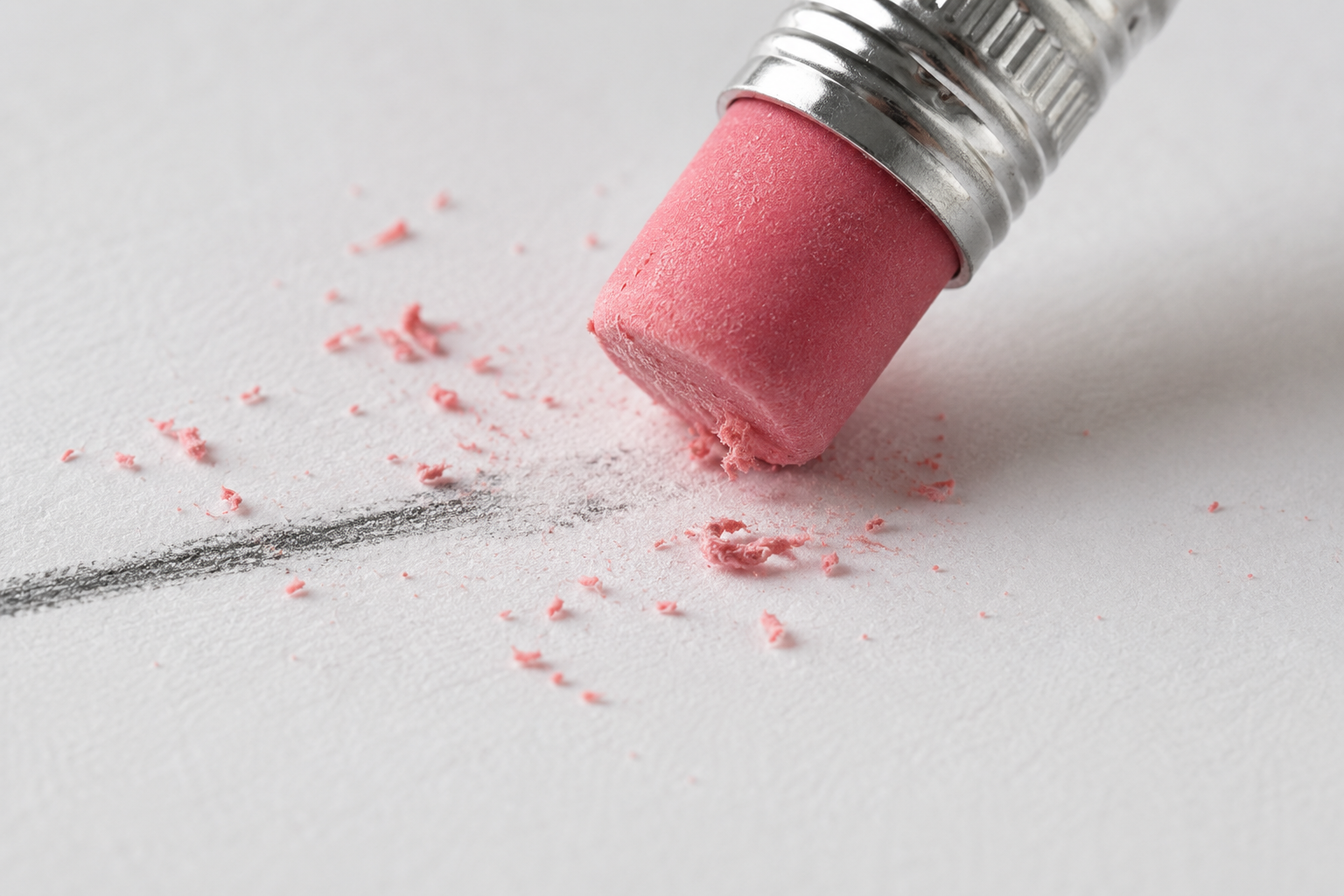
Usually very close. Your body handles the rest, and any temporary dip in your own HA recovers. It's an eraser, not a time machine — but it's a very good eraser.
Can every filler be dissolved?
Only HA fillers. If you're not sure what you had placed — say it was done somewhere else — we'll sort that out before doing anything.
Is hyaluronidase safe?
For most people, yes, and it's been used in medicine for decades. Allergic reactions are uncommon, which is exactly why it's given by a clinician who can screen for them and manage one — not sold as a DIY kit.
Not Happy With Your Filler? That's Fixable — Here in Southern Oregon
The best part of HA filler is that starting isn't a life sentence: if you ever want to adjust or undo it, we can. If you're carrying filler you're not happy with — yours or someone else's work — or you just want to talk options, we help patients across Medford, Ashland, and Grants Pass do exactly that. Brand new to all this? Start with our Dermal Fillers 101 guide and check out our page on dermal fillers.
Book a consultation — including if you just need something dissolved.
References
1. Safia A, Abd Elhadi U, Merchavy S, Batheesh R, Bathish N. Role of Hyaluronic Acid in Post-Blepharoplasty Volume Restoration and Complication Management: A Systematic Review. J Clin Med. 2025;14(13):4572. https://doi.org/10.3390/jcm14134572
2. Frank K, Hilton S, Kerscher M, Grablowitz D, Kopera D, Sulovsky M, Kursinov L. The Safety Profile of a Portfolio of Hyaluronic Acid-Based Soft Tissue Fillers Manufactured Using MACRO Technology: A Systematic Review of Clinical Evidence. Life (Basel). 2026;16(1):110. https://doi.org/10.3390/life16010110
